Let’s start with a question.
What if you could show ads to people right after they walk into your competitor’s business?
Not later.
Not “maybe someday.”
But while they’re actively in-market.
That’s exactly what geofencing allows you to do.
And for local businesses, it’s one of the most practical—and misunderstood—tools in modern marketing.
What Is Geofencing Advertising?
Geofencing is a form of digital advertising that uses location data to target people based on where they’ve been in the real world.
Here’s how it works in simple terms:
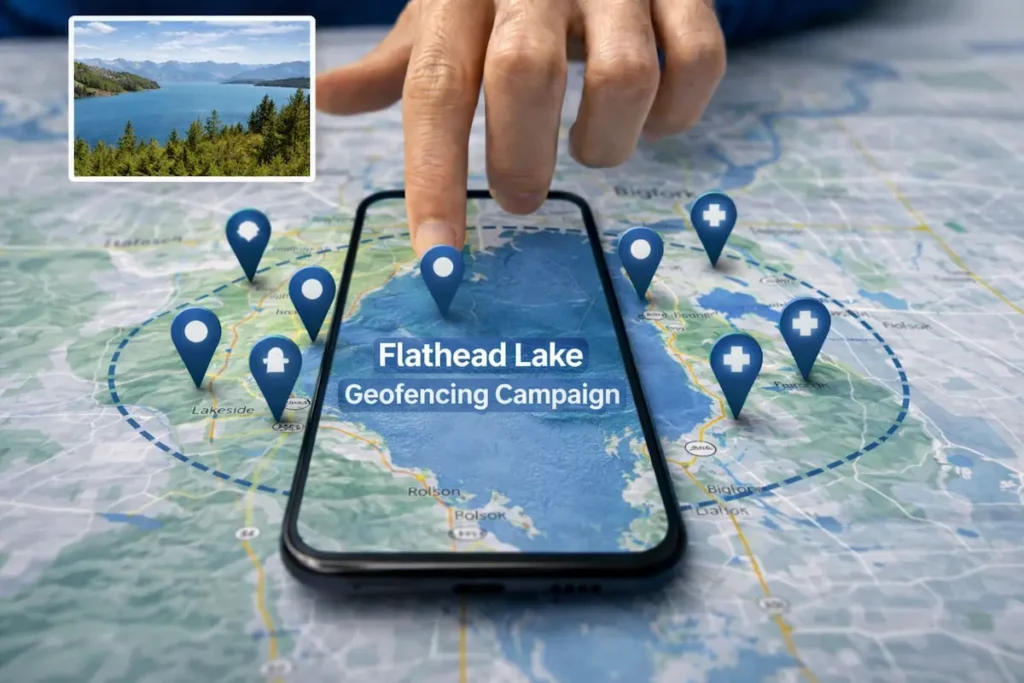
You draw a virtual boundary (a “fence”) around a location.
In plain English?
You’re targeting people based on real-world behavior, not just online activity.
Why This Matters for Local Businesses
Most advertising tries to predict intent.
Geofencing captures it.
If someone walks into:
- A car dealership
- A bank
- A movie theater
- A retail store
There’s a pretty good chance they’re actively considering a purchase or service.
That’s a much stronger signal than a Google search from six months ago or a vague demographic profile.
With geofencing, you’re reaching people who have already shown real-world intent.
Yes—You Can Target Your Competitors’ Customers
If someone visits a competing business, you can deliver ads to them afterward—often within hours or days of that visit.
And yes… it’s completely legal.
You’re not collecting personal data or identifying individuals. You’re using anonymized location signals to reach devices that entered a specific area.
It’s no different than placing a billboard across the street from a competitor—just a lot more precise.
How the Ads Actually Work
Geofencing doesn’t usually serve ads while someone is inside a location.
Instead, devices are identified and ads are delivered later as users browse apps or websites.
So instead of interrupting the moment… you’re reinforcing it.
A Mobile-First Strategy (With More Reach Than You Think)
Geofencing is primarily a mobile-driven tactic—and that’s a good thing.
Over 80% of digital activity happens on mobile devices, meaning you’re reaching people where they already are.
But it doesn’t stop there.
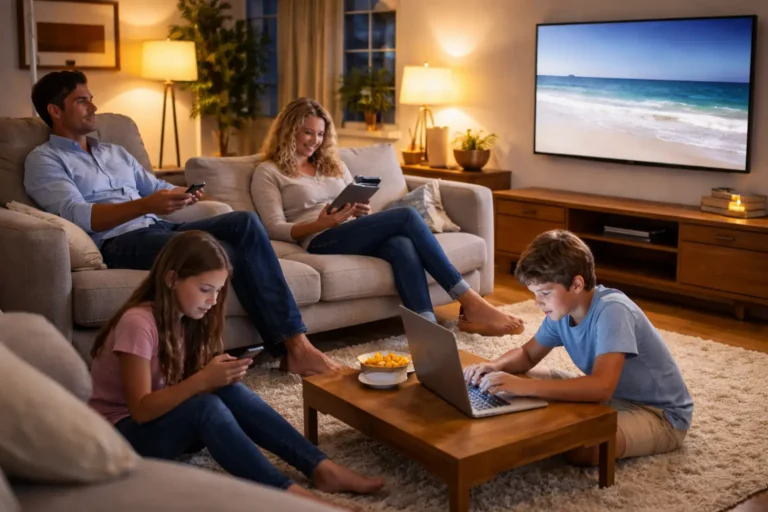
Once a device is identified, campaigns can extend to that same user across other devices like desktop, laptop, and even connected TV.
So while targeting starts with mobile, reach expands across screens.
Measurable Results (This Is Where It Gets Interesting)
You can track impressions, click-through rates, website visits, and conversions.
But geofencing also allows for foot traffic attribution—showing whether someone who saw your ad later visited your business.
That’s not theory. That’s trackable behavior.
Geofencing Works Best When It’s Focused
This isn’t a “spray and pray” tactic.
The best geofencing campaigns are tight and intentional.
That might mean:
- Targeting 3–5 key competitor locations
- Focusing on a specific event
- Building a defined geographic radius
- Narrowing targeting down to a neighborhood—or even a side of the street
- Focusing on specific regions like the southern half of Flathead Lake
The tighter the targeting, the more efficient the campaign.
Where Geofencing Fits in Your Strategy
Geofencing works best alongside Connected TV, streaming audio, and other digital tactics.
Multiple touchpoints reinforce each other and build familiarity.
A Quick Word from Blodgett Marketing
At Blodgett Marketing, we focus on connecting real-world behavior with digital advertising.
It’s not about being everywhere—it’s about being in the right place at the right time.
When done right, geofencing turns real-world intent into real business results.